Disclosure: The Watch Goat is reader-supported. When you buy through links on this page, we may earn an affiliate commission from Amazon at no extra cost to you. Prices and availability change — check the listing for the current price.
Some watches are famous for a season. A rare few become reference points — designs so right, stories so strong, that everything made afterward is measured against them. The ten watches below are the ones that built modern horology: they invented categories, survived the quartz crisis, went to the moon and the bottom of the ocean, and still sell out decades after their debuts. This is not a list of the most expensive or the most complicated watches ever made. It is a list of the most important — the references every collector eventually learns by heart, and the ones worth understanding before you spend a dollar on anything else.
The 10 Most Iconic Watches Ever Made
1. Rolex Submariner (1953) — the Dive Watch Blueprint
Every dive watch on earth descends from the Submariner. Launched in 1953 with 100 m of water resistance, a rotating timing bezel and luminous Mercedes hands, it codified the genre's entire visual language — and then James Bond wore one in Dr. No, sealing its place in culture. Today's reference 124060 carries 300 m, a ceramic bezel and the Caliber 3230, but the silhouette is untouched. It is the most recognized watch in the world, and the default answer to 'what one watch should I own?'
- Why it matters: Invented the modern dive watch; 70+ years of unbroken production.
- Reality check: Retail waitlists are real; gray-market prices run above list.
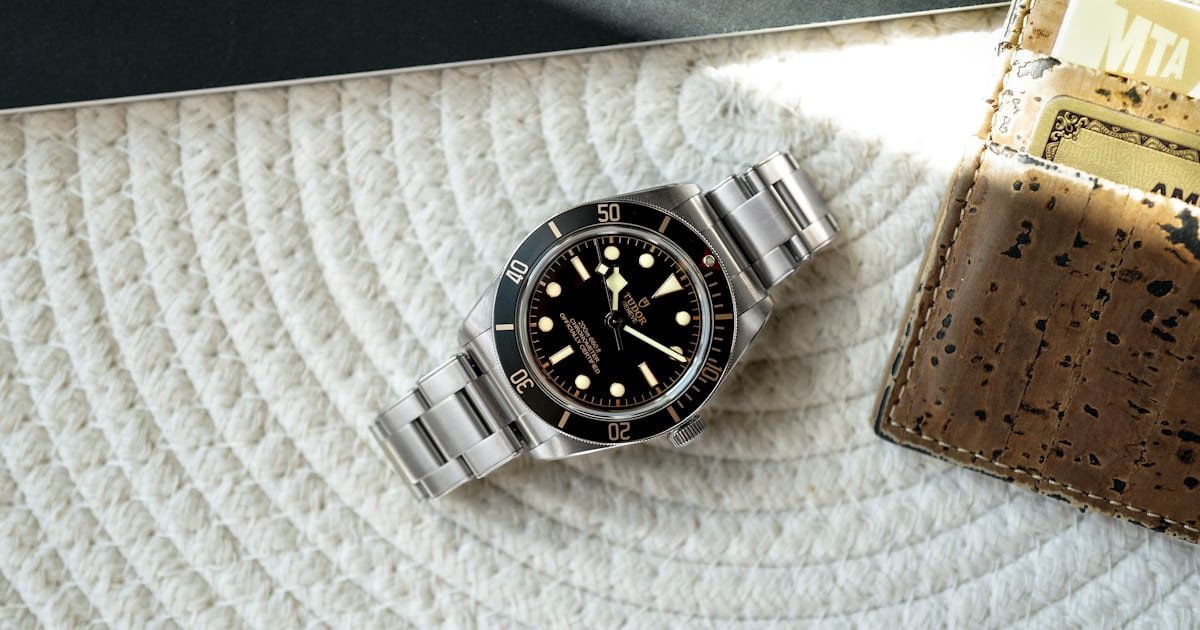
2. Omega Speedmaster Professional (1957) — the Moonwatch
The Speedmaster was a racing chronograph until NASA torture-tested it against every rival in 1965 and issued it to astronauts. On July 21, 1969, Buzz Aldrin wore one onto the lunar surface — the first and still only watch worn on the moon. The current Moonwatch keeps the Hesalite crystal, the 42 mm twisted-lug case and a hand-wound movement, because some formulas you do not improve. It remains the most historically significant chronograph ever made, and one of the few icons you can still buy at retail.
- Why it matters: Flight-qualified by NASA; first watch on the moon.
- Reality check: Hand-wound daily ritual is charm or chore, depending on you.
3. Patek Philippe Nautilus (1976) — the Luxury Sports Original
Gérald Genta sketched the Nautilus on a napkin during a Basel fair dinner, inspired by an ocean-liner porthole. Patek Philippe's audacious pitch — a steel sports watch priced like gold — redefined what luxury could be. The horizontally embossed dial, integrated bracelet and hinge 'ears' are instantly recognizable, and the 5711's 2021 discontinuation turned the reference into a phenomenon. The Nautilus proved that restraint, executed perfectly, outranks complication.
- Why it matters: Created the luxury steel sports category alongside the Royal Oak.
- Reality check: Effectively unobtainable at retail; treat waitlists as folklore.
4. Audemars Piguet Royal Oak (1972) — the Watch That Saved Swiss
Designed overnight by Gérald Genta and launched in 1972, the Royal Oak was the first luxury watch in stainless steel — priced higher than many gold dress watches of its day. The octagonal bezel with eight exposed gold screws, the tapisserie dial and the impossibly thin integrated case were so radical that AP's own dealers revolted. Then the quartz crisis hit, and the Royal Oak became one of the pillars that carried mechanical watchmaking through it. Half a century later, the 'Jumbo' remains the connoisseur's grail.
- Why it matters: Invented luxury steel; Genta's masterpiece; saved its maker.
- Reality check: Allocation-only at boutiques; secondary prices reflect it.
5. Cartier Tank (1917) — the Oldest Design Still Selling
Louis Cartier drew the Tank in 1917, its brancards echoing the treads of Renault tanks on the Western Front. More than a century later the design is unchanged — Roman numerals, chemin de fer minute track, blued sword hands — and the list of owners reads like a century of fame: Jackie Kennedy, Princess Diana, Andy Warhol, Muhammad Ali. The Tank Must brought the icon back at an attainable price, proving great design does not expire. It is the dress watch against which all rectangular watches are judged.
- Why it matters: 107 years of continuous relevance; the template for dress watches.
- Reality check: Quartz Tank Must is the entry; mechanical Louis Cartier is the purist's pick.
6. TAG Heuer Monaco (1969) — the Rebel Chronograph
The Monaco broke every rule in 1969: the first water-resistant square case, one of the first automatic chronograph movements (Caliber 11), and a crown on the left just to be different. It sold modestly until Steve McQueen strapped one on in Le Mans in 1971 — after which it became the coolest watch in motorsport forever. The modern Monaco keeps the square case, the blue sunburst dial and the attitude. It remains proof that iconoclasm, done with conviction, ages better than conformity.
- Why it matters: First square waterproof chronograph; McQueen's watch.
- Reality check: 39 mm square wears large — try before buying.
7. Jaeger-LeCoultre Reverso (1931) — the Art Deco Survivor
The Reverso was engineered for British polo players in India who kept smashing crystals — JLC's answer was a case that flips over to protect the dial. That single mechanism, wrapped in perfect Art Deco proportions, has carried the watch from 1931 to today essentially unaltered. The reverse side now hosts engravings, second time zones and minute repeaters, but the gesture is the same. It is the most elegant mechanical solution in watchmaking, and the oldest Art Deco design still in production.
- Why it matters: A complication born of pure function; Art Deco's wristwatch.
- Reality check: Smallish case sizes read dressy — that is the point.
8. Seiko Astron (1969) — the Watch That Changed Everything
On Christmas Day 1969, Seiko shipped the Astron 35SQ: the world's first quartz wristwatch, accurate to five seconds a month — a hundred times better than anything mechanical. It cost as much as a car, and within a decade its technology had collapsed Swiss industry employment by two-thirds. Love or lament the Quartz Crisis, the Astron is arguably the most consequential watch ever made. Seiko's modern Astron GPS Solar line honors it by syncing to satellites — still the cutting edge of accuracy.
- Why it matters: First quartz watch; redrew the entire industry.
- Reality check: The 1969 original is museum-grade; modern Astrons carry the name.
9. Breitling Navitimer (1952) — the Pilot's Computer
The Navitimer put a circular slide rule on a wristwatch in 1952, letting pilots compute fuel burn, climb rates and ground speed before cockpit computers existed. The Aircraft Owners and Pilots Association adopted it as their official watch, and its busy, instrument-like dial became the visual definition of the pilot's chronograph. Seventy years on, the B01-powered Navitimer still wears that slide rule proudly. In an age of glass cockpits it is gloriously unnecessary — and that is exactly its charm.
- Why it matters: The definitive aviation chronograph; AOPA's official watch.
- Reality check: The dial is busy by design; 41 mm and up only.
10. Vacheron Constantin Patrimony (2004, lineage to 1950s) — the Quiet Grail
The youngest name here by reference, but the oldest manufacture: Vacheron Constantin has made watches without interruption since 1755. The Patrimony distills that heritage into purity — a slim round case, a minute-track dial, sword hands, nothing else. It represents the school of watchmaking that whispers: no celebrity ambassadors, no hype drops, just 270 years of finishing executed at the highest level. Including it over louder candidates is deliberate — some icons are famous, and some are simply perfect.
- Why it matters: The oldest continuous manufacture's purest expression.
- Reality check: Understated to a fault — if you want recognition, look elsewhere.
How We Chose
Icon status is not auction price or Instagram heat — we scored four things: historical consequence (did it change what watches are?), design endurance (is the original silhouette intact?), cultural reach (do non-collectors recognize it?), and continuous production or lineage. Every watch here passes all four. Honorable mentions that missed the cut: the Rolex Datejust and Day-Date (icons of status more than design), the Omega Seamaster (overshadowed by its Submariner rivalry), and the Casio G-Shock DW-5000 (a modern icon still earning its century).
Buying an Icon: What to Know First
Buy the story you will actually tell. Icons appreciate in meaning, not just value — the Moonwatch you wore on your wedding day beats a Nautilus in a safe. Second: availability is not quality. The Submariner's waitlist says nothing about the Speedmaster, which is equally iconic and available today. Third: pre-owned is normal for icons — vintage Submariners, Tanks and Reversos have deep, liquid markets. Verify authenticity through serial numbers and trusted sellers, and budget for service on any vintage piece. Finally, prices move; check current listings rather than trusting any guide, including this one.
Frequently Asked Questions
What is the most iconic watch of all time?
By global recognition, the Rolex Submariner — it is the design non-collectors can name. By historical significance, the Omega Speedmaster, the only watch flight-qualified by NASA and worn on the moon. By industry impact, the Seiko Astron, which changed what a watch is.
Are iconic watches good investments?
Blue-chip icons — Submariner, Royal Oak, Nautilus — have historically held value better than most, but watches are terrible primary investments: illiquid, costly to service, and cyclical. Buy an icon because you love it; treat any appreciation as a bonus.
Which iconic watch is most affordable?
The Cartier Tank Must and the Omega Speedmaster are the attainable legends here — the Tank through its quartz Must line, the Speedmaster because Omega actually stocks it. The modern Seiko Astron also delivers its nameplate's innovation story at a fraction of Swiss icon pricing.
Should I buy new or vintage for these models?
New gets you warranty, modern materials and zero authenticity risk. Vintage gets you patina, smaller classic sizes and often better value — plus authenticity homework. First-time icon buyers should start new or certified pre-owned.
The Bottom Line
The top 10 iconic watches of all time earned their status the slow way — decades of getting it right. If you buy one, buy the one whose story you will tell at dinner: the Moonwatch's giant leap, the Tank's century of elegance, the Submariner's quiet perfection. Icons do not go out of style; that is the entire point. Check the listings for current availability and pricing, and wear whichever you choose often — these watches were made to work.