Disclosure: The Watch Goat is reader-supported. As an Amazon Associate we earn from qualifying purchases made through links on this page, at no extra cost to you.
Vintage watches are the last corner of the watch world where $500 still buys something genuinely interesting. Not a fashion brand's quarterly design refresh, not a spec-sheet compromise — but a real mechanical timepiece with a dial that was printed before you were born and a movement that has already outlived several smartphones. The catch: the sub-$500 vintage market rewards knowledge and punishes impulse. This guide supplies the knowledge — ten models we would spend our own money on, what each should cost, and the red flags that separate a bargain from a polishing-wheel victim.
Why Vintage Watches Still Matter
A vintage watch is the opposite of disposable fashion. Most pieces on this list were built to be serviced, not replaced — their movements are still supported by parts suppliers and independent watchmakers decades later. They also carry design languages that modern brands only imitate: mid-century typography, acrylic domes, and case shapes that predate focus groups. And because taste cycles faster than production, genuinely good pieces regularly trade hands for less than a new mall watch.
- Mechanical and automatic movements that outlive batteries — and their original owners.
- Designs with real provenance: Art Deco Gruens, space-age Accutrons, tool-watch Seikos.
- Sustainable by default — the most recycled watch is the one already on a wrist.
What $500 Actually Buys in Vintage
Five hundred dollars is the sweet spot between the $100 gamble tier — where every purchase is a dice roll on a dying movement — and the $1,000 collector tier where you pay for condition grades you may not need yet. At this budget you should expect a running, presentable watch from a real manufacturer. You should not expect box and papers, mint dials, or investment-grade rarity. Judge every candidate on four criteria before price even enters the conversation.
- Brand and movement: favor Seiko, Citizen, Bulova, Hamilton, Tissot and Omega — parts and service still exist.
- Condition language: 'serviced' or 'recently overhauled' beats 'untested' every single time.
- Originality: dial, hands and crown should be factory — replacements gut both value and charm.
- Case integrity: walk away from over-polished lugs and re-brushed edges; they cannot be un-polished.
Top 10 Vintage Watches Under $500
Prices below reflect realistic private-sale and dealer asking ranges for running examples in good honest condition — not auction outliers, not project watches. Every pick is findable this month if you are patient.
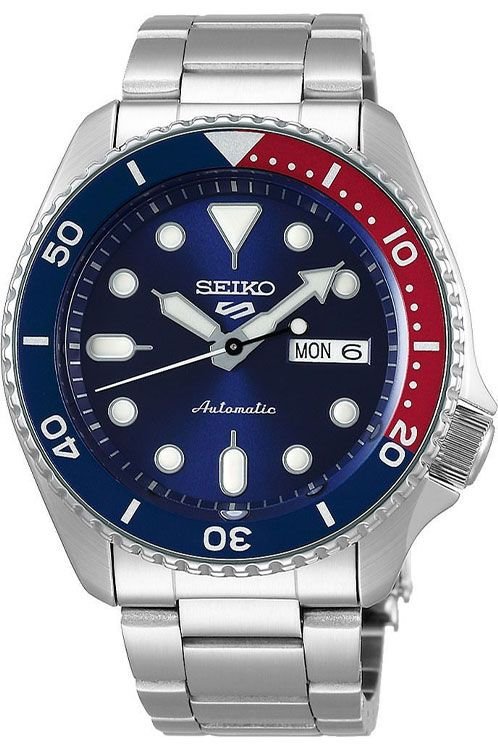
1. Seiko 5 Automatic (1970s–80s) — Best First Vintage Watch
The Seiko 5 is the Model T of vintage watches: millions made, mechanically simple, and still the smartest entry point into the hobby. Day-date complications, funky 1970s dials, and a movement family any watchmaker on earth can service. Expect $100–$250 for a clean example. Check current asking prices before you commit — the range is wide because condition varies wildly.
- Pros: Cheap to service; endless dial variety; bulletproof movements.
- Cons: Chrome-plated cases wear through; plentiful supply means no rush — buy the best example, not the first.
2. Timex Marlin Hand-Wound (1960s) — Best Dress Vintage
The original Marlin is mid-century American minimalism: a thin 34mm case, elegant applied indices, and a hand-wound movement you wind every morning like a ritual. Survivors run $80–$150, and Timex's modern hand-wound reissue — around $200 new — is worth cross-shopping if you want the look with a warranty. Either way, it is the most tasteful watch per dollar on this list.
- Pros: Genuinely elegant design; affordable enough to wear daily; reissue safety net.
- Cons: 34mm wears small on large wrists; plated cases show brass at the lugs.
3. Citizen Jet Auto Dater (1960s) — Best Under-the-Radar Pick
Citizen's Jet line was Japan's answer to Swiss dress automatics, with engineering and dials that rival contemporary Seikos for a fraction of the price. Collectors have quietly absorbed the best examples, but $120–$300 still finds a sharp one. Look for the applied logo, an original crystal, and a crisp date change at midnight — a quick health check on the movement.
- Pros: Sophisticated Japanese engineering; rising collector interest; strong value retention.
- Cons: Parts scarcer than Seiko; fewer watchmakers know the movements.
4. Bulova Accutron (1960s–70s) — Best Conversation Piece
Before quartz, there was the tuning fork: the Accutron hums instead of ticks, and its seconds hand glides like nothing else in mechanical horology. It was accurate enough for NASA timing work. Budget $200–$500 for a serviced 214-movement example, and confirm the electronics have been checked — a dead coil turns a space-age icon into a paperweight. Serviced, documented examples appear regularly; compare a few listings before buying.
- Pros: Historically significant; hypnotic smooth sweep; unmistakable wrist presence.
- Cons: Specialist servicing only; unserviced examples are expensive gambles.
5. Tissot Seastar Seven (1950s–70s) — Best Swiss Value
Vintage Tissot is the quiet arbitrage of Swiss watchmaking: same country, same era, same quality tier as brands charging double. The Seastar Seven offers clean mid-century dials, robust manual and automatic movements, and occasionally gold-capped cases, all for $180–$400. It is the pick for buyers who want Swiss heritage on paper without the Omega tax.
- Pros: Real Swiss manufacture heritage; elegant dials; widely serviceable.
- Cons: Gold-capped cases cannot be polished aggressively; less name recognition than Omega.
6. Orient Weekly Auto King Diver (1970s) — Best Tool-Watch Character
Orient's 1970s diver-style pieces are what Seiko 5s were ten years ago: underpriced, overbuilt, and disappearing into collections. The Weekly Auto King Diver runs $250–$500 and wears like a watch twice the price — bold case, legible dial, in-house automatic. This is the connoisseur's pick on the list, and the one most likely to be worth more in five years.
- Pros: Rare without being unobtainable; genuine tool-watch build; strong collector trajectory.
- Cons: Bezels and crystals are nearly impossible to replace; buy the best condition you can find.
7. Wittnauer Geneve Automatic (1950s–60s) — Best Dressed-Up Value
Wittnauer spent decades as Longines' American sibling, and its Geneve-line automatics carry that DNA: refined cases, quality Swiss movements, and restrained dials for $150–$350. Almost nobody outside the hobby knows the name, which is precisely why the prices stay sane. A serviced Wittnauer on a leather strap passes for a watch three times its cost in any room.
- Pros: Longines-adjacent quality; dress-watch elegance; minimal hype tax.
- Cons: Low recognition means low liquidity; dials often show age spotting.
8. Hamilton Thin-o-Matic (1960s) — Best American Classic
Hamilton's Thin-o-Matic line captures the brand's American golden age: sleek mid-century cases, quality Swiss automatic movements, and design restraint that has aged perfectly. Expect $200–$500 depending on case metal and dial condition. If you love mid-century aesthetics, this is the authentic article — not a reissue, not an homage, the real thing.
- Pros: Iconic American heritage; superb mid-century design; solid movements.
- Cons: Popular with collectors now — clean examples move fast; gold-filled cases show wear.
9. Omega Genève Early Quartz (1970s) — Best Name per Dollar
Yes, a real Omega under $500 exists — you just have to accept early quartz technology and some patience. The 1970s Genève quartz models occasionally surface at $400–$500 needing nothing more than a battery and a crystal polish. You are buying the dial, the case finishing, and the name; the movement is a commodity. For a first Swiss luxury watch, it is a legitimate back door.
- Pros: Genuine Omega on the wrist; quality case and dial work; the ultimate budget flex.
- Cons: Quartz-era Omegas hold value poorly; verify the movement runs before any negotiation.
10. Gruen Precision (1940s–60s) — Best Art Deco Charm
Gruen was a giant of early American watchmaking, and its Precision-line dress watches deliver curved cases, applied numerals and genuine Art Deco dials for $100–$250. These are occasion watches — wear one to a wedding and it will out-charm everything in the room. Movements are simple and serviceable; cases are often gold-filled, so check for brass showing through at the edges.
- Pros: Unmatched vintage charm per dollar; real historical pedigree; easy servicing.
- Cons: Small by modern standards; gold-filled cases cannot be refinished endlessly.
How to Buy Vintage Without Getting Burned
The rules below filter out ninety percent of bad purchases. Apply them before you fall in love with a dial.
- Ask for movement photos and a timegrapher reading — sellers who refuse are telling you something.
- Budget a service: $150–$300 with an independent watchmaker keeps a fifty-year-old watch honest.
- Prefer 'worn honestly' over 'restored' — reprinted dials and polished cases destroy value and character.
- Buy the seller: established dealers and forum regulars with feedback beat anonymous marketplace listings.
Frequently Asked Questions
Are vintage watches under $500 a good investment?
Treat them as wearable enjoyment with mild upside, not an investment vehicle. Seiko 5s and Gruens hold value roughly flat; the Orient and clean Accutrons have genuine appreciation potential. The real return is owning a mechanical watch with a story for less than a new quartz fashion piece.
Can you wear a vintage watch every day?
Yes, with caveats. Most vintage pieces have little or no water resistance — rain is the enemy, swimming is forbidden. A freshly serviced example from this list will run reliably for daily duty; wind it, avoid hard knocks, and service it every five to seven years.
Where is the best place to buy vintage watches?
Specialist vintage dealers offer safety at a premium; online marketplaces and forums offer prices with homework attached. Wherever you buy, compare several listings first — the links above check current market asking prices, and our guide to vintage watches worth collecting maps the wider landscape.
The Bottom Line
Vintage under $500 is not about finding a cheap Rolex — it is about finding a better watch than $500 buys new. Start with the Seiko 5 or Timex Marlin if you are new, graduate to the Accutron or Orient once you learn your taste, and never skip the service-history question. Do that, and you will own a piece of watchmaking history that beats every mall watch in the room. For more options in this price band, see our classic watches under $500 guide.