Disclosure: The Watch Goat is reader-supported. When you buy through links on this page, we may earn an affiliate commission from Amazon at no extra cost to you. Prices and availability change — check the listing for the current price.
Ask ten collectors which watch started their collection and you will hear the same five names — because certain watches do more than tell time. They teach you what mechanical quality feels like, what design restraint looks like, and which references the entire industry is still chasing. This is that list: ten cornerstone pieces, from a $250 Seiko to the Submariner, each one a lesson a serious collection eventually learns.
What Makes a Watch a Collector's Piece?
A collector's watch is not simply expensive or rare. The pieces that anchor collections share four traits — and price is not one of them:
- Heritage — the brand and model have a documented history that matters: firsts, records, issued service, cultural moments.
- A story — something happened in or because of this watch that people still talk about decades later.
- Movement quality — a caliber worth opening the caseback for, whether it costs $250 or $25,000.
- Staying power — the design has survived at least a generation without looking dated, and parts and servicing will exist for decades more.
Here are the ten watches that check every box — ordered from the first watch you should buy to the one you will chase for years.
The 10 Cornerstone Watches for Collectors
1. Seiko 5 Sports SRPD55 — The Entry Lesson (about $250)
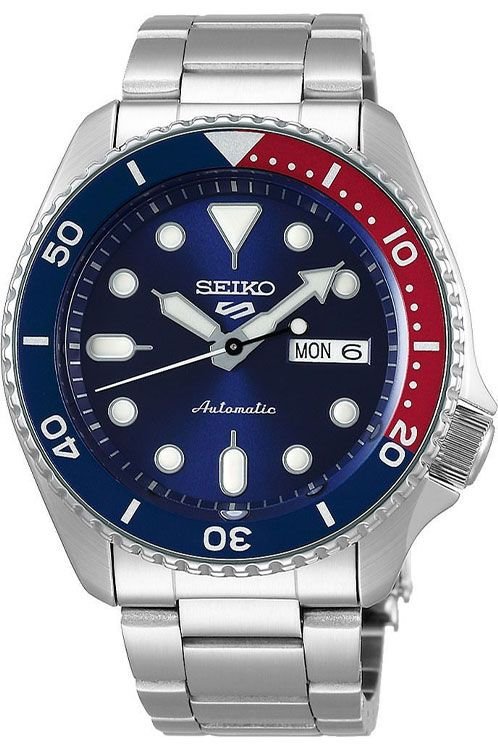
Every collection starts with an honest automatic, and the SRPD55 is the modern answer: Seiko's in-house 4R36 movement with hacking and hand-winding, 100 meters of water resistance, a day-date, and a case descended from the legendary SKX. It wears well on almost any wrist, survives real life, and costs less than a nice weekend away. Collectors respect it because it teaches the fundamentals — setting, winding, wearing, maintaining — without financial fear.
2. Casio G-Shock DW5600 — The Indestructible Icon (about $50)
In continuous production since 1987, the square G-Shock is design honesty incarnate: 200 meters of water resistance, shock protection that shrugs off drops that would kill a mechanical watch, and a battery measured in years. Collectors keep one because every box needs a watch you never have to think about — and because the silhouette is as historically significant as anything Swiss.
3. Orient Bambino — The Dress-Watch Gateway (about $150)
Sooner or later every collection needs a dress watch, and nothing under $300 competes with the Bambino: a domed crystal over a clean, vintage-leaning dial, powered by Orient's in-house F6724 automatic with hacking and hand-winding. It teaches proportion — dress watches wear smaller and thinner — and it explains why the industry respects Orient's vertical manufacturing.
4. Hamilton Khaki Field Mechanical — Real Military Heritage (about $550)
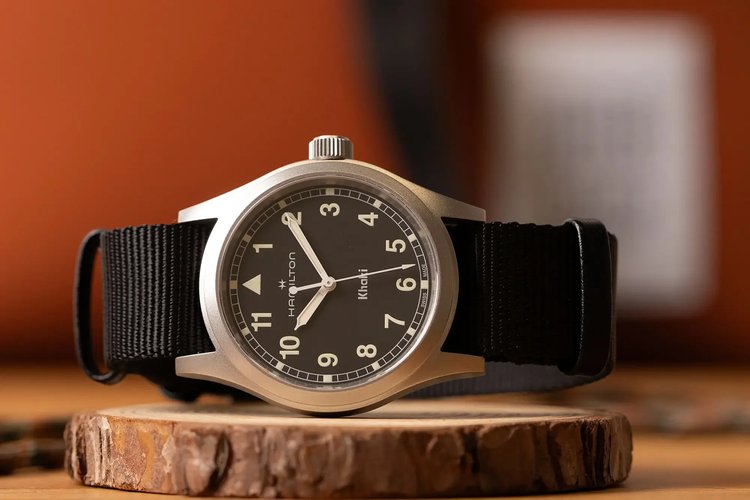
Hamilton supplied field watches to the U.S. military for decades, and the Khaki Field Mechanical is that issued watch, essentially unchanged: 38mm of brushed steel, the hand-wound H-50 movement with 80 hours of reserve, drilled lugs, and total legibility. Winding it every morning builds a relationship with a watch that no automatic can replicate — the collector's rite of passage.
5. Tissot PRX Powermatic 80 — The Modern Swiss Entry (about $700)
The PRX dragged 1978 integrated-bracelet design back into the mainstream and then undercut the whole category on specs: a sapphire crystal, 100 meters of water resistance, and the Powermatic 80's 80-hour reserve — a movement spec that embarrassed watches at triple the price. This is what 'Swiss Made' buys in 2026, and it is the reference point for judging every integrated sports watch under five figures.
6. Cartier Tank Must — The Dress Icon (about $3,000)
Louis Cartier drew the Tank in 1917, inspired by the Renault tanks of the Western Front, and the rectangle has been the dress-watch answer ever since — worn by Jackie Kennedy, Muhammad Ali, and half of Hollywood. The Tank Must makes the design attainable: honest quartz, a sapphire cabochon crown, and proportions nothing else matches. A collection without a rectangular dress watch has a hole in it.
7. Grand Seiko SBGA211 Snowflake — The Connoisseur's Turn (about $6,200)
The Snowflake is the watch that turns wearers into connoisseurs: a titanium case finished by hand with Zaratsu polishing, a dial texture inspired by the snowfields outside the Shiojiri studio, and Spring Drive — a hybrid caliber whose seconds hand glides in perfect continuous motion. Owning one signals the moment a collector stops buying logos and starts buying craft.
8. Omega Speedmaster Professional — The Moonwatch (about $7,000)
Flight-qualified by NASA in 1965 and worn on the lunar surface in 1969, the Speedmaster is the most story-dense watch in production. The hand-wound caliber, the hesalite crystal, the tachymeter bezel — nearly unchanged for six decades. Every chronograph ever made is measured against it, which is exactly why it belongs in a serious collection.
9. Jaeger-LeCoultre Reverso — The Design Object (about $8,000)
Born in 1931 so British polo players could flip the case and shield the glass, the Reverso is Art Deco made wearable: a sliding, swiveling case, a guilloché dial, and JLC's in-house calibers behind it. It is the rare watch that reads as both jewelry and engineering — and proof that genuine design innovation ages better than any trend.
10. Rolex Submariner — The Benchmark (about $10,000+)
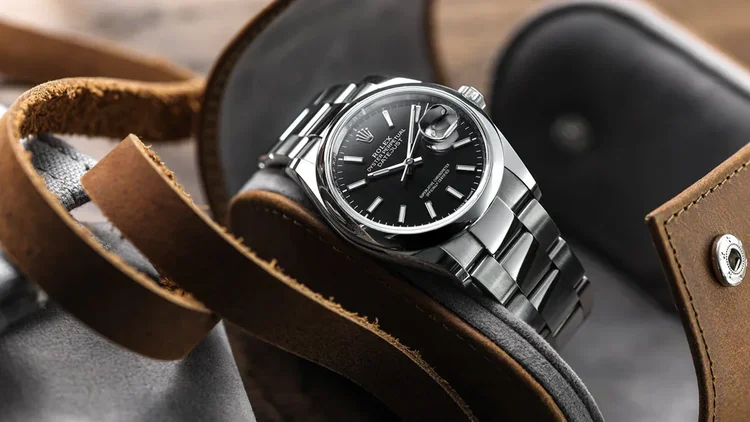
The Submariner is not the most interesting watch on this list, but it is the reference point for all of them: the dive-watch template since 1953, built to a consistency nothing else matches, holding value so reliably that pre-owned prices became a market index. Buy it last — after the rest of this list has taught you why it costs what it costs.
Three Rules for Building a Collection
- One watch per role — a field watch, a diver, a dress piece, a beater. Four watches that each do something different beat ten that all do the same thing.
- Buy the watch, not the hype — a $250 Seiko worn daily teaches more than a grail bought on credit and babied. Scarcity theater is not value.
- Wear everything you buy — a watch you will not wear is telling you something. Sell it and fund the one you reach for.
Frequently Asked Questions
How many watches should a collection have?
Three to five, deliberately chosen. Beyond that, every addition should answer a specific question — a complication you lack, an era you love, a maker you want to understand. A box of twenty same-ish sports watches is an accumulation, not a collection.
Should collectors buy new or pre-owned?
Both. New gives you the warranty and the full ownership story; pre-owned unlocks discontinued references and softer prices. Buy pre-owned only from sellers offering authentication and a return window — the $400 you save is not worth a $4,000 frankenwatch.
Do affordable watches belong in a serious collection?
Absolutely. The G-Shock and the Seiko 5 sit in more serious collections than most five-figure pieces, because collections are judged on coherence and knowledge, not receipts. Price impresses strangers; choices impress collectors.
The Bottom Line
A great collection is not ten expensive watches — it is a small set of pieces that each teach you something, worn hard and understood deeply. Start with the Seiko 5 or the G-Shock, add the Bambino and the Khaki when you know your taste, and let the Submariner wait until you have earned the opinion.