Disclosure: The Watch Goat is reader-supported. When you buy through links on our site, we may earn an affiliate commission at no extra cost to you.
Are Citizen Watches Good? An Honest 2026 Verdict on Quality & Value
Citizen might be the most quietly important company in watchmaking. It powers half the industry's microbrands through its Miyota movement division, invented solar quartz as we know it, and sells more watches in a year than most Swiss houses manage in a decade. Yet it rarely gets the enthusiast respect Seiko enjoys. So: are Citizen watches actually good — and which ones are worth buying in 2026? Here's the honest accounting.
Are Citizen Watches Good? The Short Answer
Yes. Citizen makes genuinely good watches — arguably the best ownership proposition under $500. The brand's entire philosophy is eliminating reasons a watch fails or needs attention: solar charging instead of batteries, scratch-hardened titanium instead of bare steel, and tool watches certified to actual international standards rather than marketing copy. What Citizen doesn't offer is prestige: nobody buys one to impress a room, and resale values are modest. If you buy watches to wear and use, Citizen is close to unbeatable at its price.
✔ Eco-Drive solar: charges from any light, runs for months in the dark, no battery changes for a decade or more.
✔ Real tool-watch credentials: ISO-certified Promaster divers and genuine pilot's watches, not desk divers.
✔ Super Titanium models with Duratect hardening — lighter and dramatically more scratch-resistant than steel.
📌 Key Takeaway: Citizen is the watch you buy when reliability is the feature. It trades status for substance, and the trade is honest.
A Century of Japanese Engineering
Founded in Tokyo in 1918 as the Shokosha Watch Research Institute, Citizen took its name from a 1924 pocket watch and spent the next century picking fights with physics. In 1976 it launched the world's first analog solar-powered watch — the technology that became Eco-Drive. In 1993 came the first multi-band radio-controlled watch, syncing itself to atomic clocks. In 2011, Satellite Wave brought GPS time-syncing that works anywhere on Earth. Along the way the company absorbed Bulova, Frederique Constant, Alpina and Arnold & Son, and became the second-largest watchmaker on the planet by volume.
The sleeper fact: Citizen's Miyota division manufactures the automatic movements inside hundreds of other brands — from $100 microbrands to watches selling for over $1,000. When you buy a Citizen, you're buying from the company the rest of the industry phones for engines.
What Citizen Genuinely Does Well
1. Eco-Drive: The Battery You Never Replace
Eco-Drive converts any light — sun, office fluorescents, a bedside lamp — into charge stored in a rechargeable cell, with power reserves of six months or more and power-save modes that stretch past a year in some models. The cells are rated for a decade-plus of daily cycling. In practical terms: no $15 battery swaps, no gasket-breaking caseback openings every two years, no dead watch in the drawer. It is the single most ownership-friendly technology in mainstream watchmaking.
2. Super Titanium and Duratect
Citizen's Super Titanium starts with solid titanium — about 40% lighter than steel — then applies Duratect surface-hardening treatments that push scratch resistance to roughly five times that of stainless steel. The result is a watch that wears like nothing and shrugs off desk-diving scars that would permanently mark a steel case. Nobody else offers this combination below $500, and few do under $1,000.
3. Tool Watches With Real Paperwork
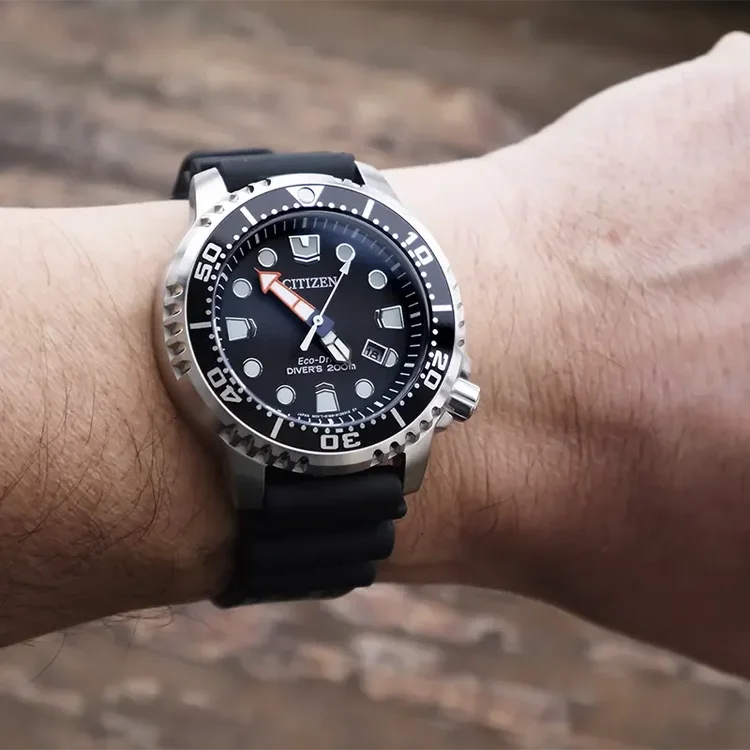
The Promaster line is where Citizen's engineering gets serious. Promaster divers carry ISO 6425 certification — the same international standard governing Seiko Prospex and Swiss dive watches — with 200m ratings, one-way bezels and lume built for actual murk. The Nighthawk pilots' watches run genuine slide-rule bezels and dual-time. The Aqualand series carries functioning depth gauges. These are instruments with certifications, not styling exercises.
Where Citizen Falls Short
The entry tier is honest about its compromises: most Citizens under $300 use mineral crystal rather than sapphire, and while mineral glass is tougher than its reputation, it will accumulate scratches over years of daily wear. Design is the bigger divider — Citizen's dials can be busy, its cases thick, and its aesthetic more 'capable instrument' than 'object of desire.' At the top end, the Series 8 automatics compete on specs with Tissot and Hamilton, but without the Swiss Made label that buyers at $1,000-plus tend to want. And like most high-volume Japanese brands, resale value is soft: a Citizen depreciates 40–60% from retail almost immediately.
🚫 Mineral glass dominates the sub-$300 range — sapphire usually starts around the Tsuyosa and Corso lines.
🚫 Weak resale and zero status signaling; buy it for yourself, not for the room.
💎 Weighing Japanese engineering against Swiss value? Start with our brand guides at
The 5 Citizen Watches Worth Buying
1. Citizen Promaster Diver BN0151-09L (Best Dive Watch)
• Eco-Drive solar, ISO 6425 200m, one-way bezel, ~$250–$350 street
✔ Best For: The default answer to 'what's a real dive watch that never needs a battery?' — the thinking person's beater.
2. Citizen Nighthawk BJ7000-52E (Best Pilot Watch)
• Eco-Drive, inner slide-rule bezel, dual time, 200m, ~$300
✔ Best For: Travelers and aviation nerds who want a genuine flight computer on the wrist for quartz money.
3. Citizen Tsuyosa (Best Everyday Automatic)
• In-house automatic, 40mm, sapphire, integrated bracelet, ~$300–$450
✔ Best For: Buyers who want the PRX's integrated-sports look with a real Miyota 90-series automatic for less.
4. Citizen Corso (Best Dress Watch)
• Eco-Drive, sapphire, clean dial, 40mm, ~$250–$350
✔ Best For: Office-and-wedding duty — a maintenance-free dress watch that disappears under a cuff.
5. Citizen Series 8 870 (Best Premium)
• Cal. 0950 automatic, 16,000 A/m anti-magnetism, ~50-hour reserve, ~$1,500
✔ Best For: Engineers and med-tech professionals who need real magnetic resistance without Omega money.
Citizen vs the Competition
• vs Seiko: Seiko owns mechanical credibility, sharper designs, and stronger resale; Citizen owns solar and titanium. For a first 'nice watch,' Seiko has more romance; for a zero-maintenance daily, Citizen wins.
• vs Casio: Casio is tougher and cheaper; Citizen is better-finished and more office-appropriate. G-Shock for abuse, Citizen for everything after 5 p.m.
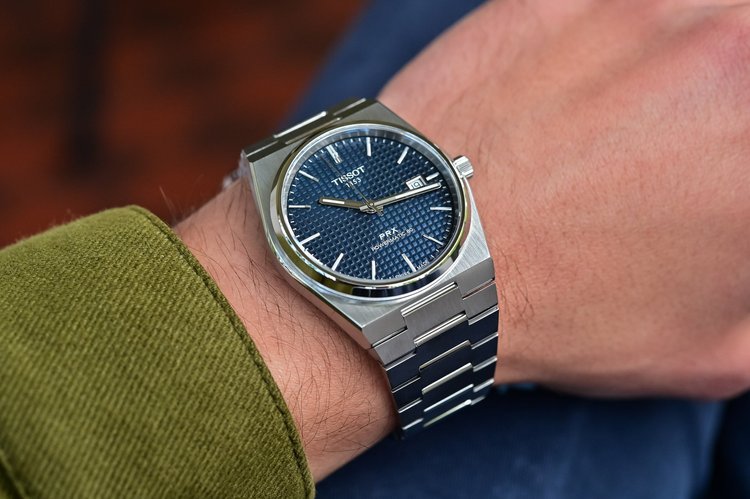
• vs Tissot: Tissot brings the Swiss Made label and Powermatic 80 automatics at $400–$700; Citizen brings Eco-Drive and Super Titanium. The label or the technology — pick your priority.
📌 Key Takeaway: Under $500, Citizen's tech-per-dollar is unmatched. Above $1,000, the Swiss competition starts making more sense.
Do Citizen Watches Hold Their Value?
No, and pretending otherwise would be dishonest. High volume and constant retail availability mean most Citizens lose roughly half their street price on day one, and only a handful of vintage or limited models — early Promasters, the occasional JDM exclusive — buck the trend. Frame the purchase correctly: a $300 Eco-Drive worn daily for fifteen years costs five cents a day and needs almost no service. That's not an investment in value; it's an investment in never thinking about your watch.
Final Verdict: Are Citizen Watches Good?
Yes — with total confidence in the brand's lane. Citizen makes some of the most dependable, technically honest watches ever mass-produced, wrapped in designs that prioritize function over flattery. It's the brand engineers, pilots and divers buy for themselves when nobody's watching. If your priorities are accuracy, durability and zero maintenance under $500, Citizen isn't just good — it's the rational choice.
✔ Buy a Citizen if you want Eco-Drive's decade of zero maintenance, an ISO-certified diver, or a featherweight hardened-titanium daily.
✔ The Promaster BN0151 and Tsuyosa are the two safest first purchases in the entire catalog.
🚫 Look elsewhere if you need the Swiss Made label, mechanical romance above $1,000, or resale value — Seiko, Tissot and Hamilton own those arguments.
A brand that sells reliability has to be reliable about what it is. Citizen is: a century of engineering that solves real ownership problems, priced for people who buy watches with their own money.
💎 For more expert watch insights, visit
Our Favorite Citizen Watches on Amazon
Citizen Promaster Diver (BN0150)
An ISO-certified 200m diver powered by Eco-Drive, so it never needs a battery change. The default recommendation for anyone who wants a serious tool watch under $300.
Citizen Eco-Drive Chandler (BM8180)
A military-style field watch with a 37mm case, luminous dial, and Eco-Drive convenience. One of the best everyday watches under $150, period.
Citizen Tsuyosa Automatic
Citizen's take on the integrated-bracelet sports watch — colorful sunray dials, sapphire crystal, and an in-house automatic movement at a price that embarrasses Swiss rivals.