Disclosure: The Watch Goat is reader-supported. When you buy through links on our site, we may earn an affiliate commission at no extra cost to you.
Are Tissot Watches Good? An Honest 2026 Verdict on Quality & Value
Tissot occupies one of the strangest positions in watchmaking: it's a genuine Swiss manufacture with 170 years of history, in-house-adjacent movements and the Swatch Group's industrial might behind it — yet it sells most of its watches for what a fashion brand charges for a logo. That gap between pedigree and price is exactly why 'are Tissot watches good?' keeps getting asked. The short version: yes, with a few honest caveats. Here's the full accounting — the movements, the materials, the weak points, and the four Tissots actually worth your money in 2026.
Are Tissot Watches Good? The Short Answer
Yes. Tissot makes genuinely good watches — arguably the best Swiss-made value proposition between $300 and $800. You get real Swiss craftsmanship, sapphire crystals on most of the range, and the Powermatic 80 automatic with its 80-hour power reserve, a spec that embarrasses Swiss rivals at twice the price. What you don't get is prestige: Tissot sits below Omega and Rolex in the Swatch Group hierarchy by design, and resale values reflect that. Buy a Tissot to wear, and it is very hard to beat.
✔ Swiss Made watches from a brand founded in 1853 — not a fashion label renting a Swiss address.
✔ Powermatic 80 automatics: 80-hour power reserve, silicon balance springs on higher trims, COSC-certified variants available.
✔ Sapphire crystals standard across most of the catalog — the scratch protection rivals charge extra for.
✔ Pricing that undercuts comparable Hamilton, Mido and Longines pieces by $100–$300 at street.
📌 Key Takeaway: Tissot is the rational entry into Swiss watchmaking — maximum horological substance per dollar, with the Swatch Group's service network behind every watch.
A 170-Year Head Start
Tissot was founded in 1853 in Le Locle, Switzerland — the same Jura mountain town that houses several of the industry's most serious manufactures. The brand built its name on practical innovation: the first mass-produced pocket watch in the 19th century, some of the earliest anti-magnetic wristwatches in the 1930s, the tactile T-Touch in 1999 — a watch with a touch-sensitive sapphire crystal years before the smartphone — and the Powermatic 80 in the 2010s, which democratized the long power reserve. Along the way Tissot became official timekeeper for the NBA, MotoGP and the Tour de France.
Since 1983 Tissot has been part of what is now the Swatch Group, the largest watchmaking conglomerate on Earth. That membership is the brand's quiet superpower: shared movement production with ETA (Swatch's in-house caliber giant), shared distribution, and a service network that reaches almost any city on the planet. When a Tissot needs work in 2040, someone will still answer the phone.
What Tissot Genuinely Does Well
1. Movements With Real Specs
The headline is the Powermatic 80: an automatic movement with an 80-hour power reserve — nearly double the industry-standard 38–42 hours — meaning the watch survives a long weekend off the wrist without stopping. On the Gentleman Silicium it gains a silicon balance spring for anti-magnetism, and Tissot offers COSC-certified chronometer versions of several models. Quartz buyers get Swiss ETA quartz calibers that run for years between batteries. At $300–$800, no other Swiss brand puts this much movement on the table.
2. Materials and Build Quality
Sapphire crystal is standard across most of the range — genuinely scratch-proof glass that competitors at this price often replace with mineral. Cases are 316L stainless steel, bracelets are solid-link on the better models, and water resistance is honest: 100m on everyday pieces, 300m on the Seastar 2000. Finishing is clean and consistent rather than luxurious — brushed surfaces are even, dial printing is sharp, and QC issues are the exception, not the pattern.
3. Range and Design
Tissot's catalog covers nearly every lane: the integrated-bracelet PRX, the everyday Gentleman, the Seastar divers, the dressy Le Locle and Chemin des Tourelles, the heritage Visodate, and the tech-forward T-Touch family. The design language favors clean dials and classic proportions over statement pieces — these are watches that look right in an office, at a wedding, and on a weekend. If the Tissot look itself isn't quite your taste, our PRX alternatives guide maps the nearest rivals.
Where Tissot Falls Short
Honesty requires the other ledger. The cheapest Tissots trim costs in predictable places — mineral crystal on some entry Everytime models, pressed clasps on base bracelets, and lume that is adequate rather than Seiko-bright. The brand's volume also means little scarcity value: a Tissot is a consumer good, not a collectible.
🚫 Resale is soft: expect 40–60% depreciation from retail on most models, quickly. Buy at street price or pre-owned, never at full MSRP if you can avoid it.
🚫 Prestige ceiling: above ~$1,000, the Swiss hierarchy argument kicks in — many buyers would rather have an entry Longines or save toward Omega, and Tissot knows it.
The 4 Tissot Watches Worth Buying
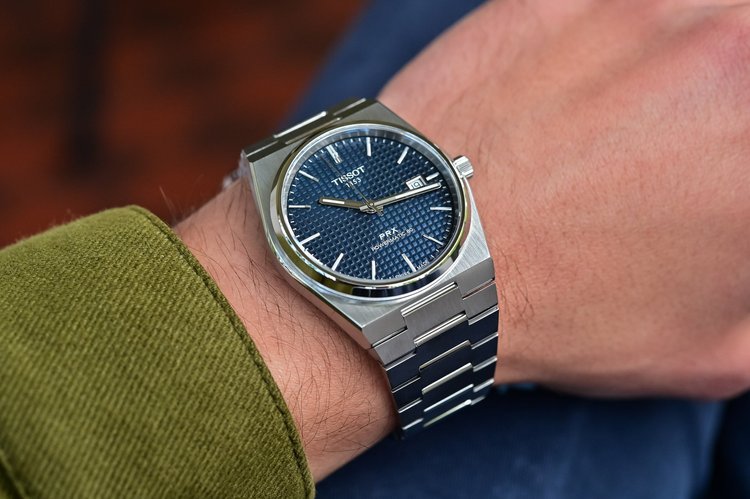
1. Tissot PRX Powermatic 80 (Best Overall)
• 40mm integrated-bracelet sports watch, Powermatic 80 with 80-hour reserve, sapphire, 100m — ~$500–$695 street.
✔ Best For: The one Tissot to buy first. The watch that dragged 1970s sport-chic design out of the four-figure tier, and still the best-dressed integrated bracelet under $1,000.
2. Tissot Gentleman Powermatic 80 Silicium (Best Everyday)
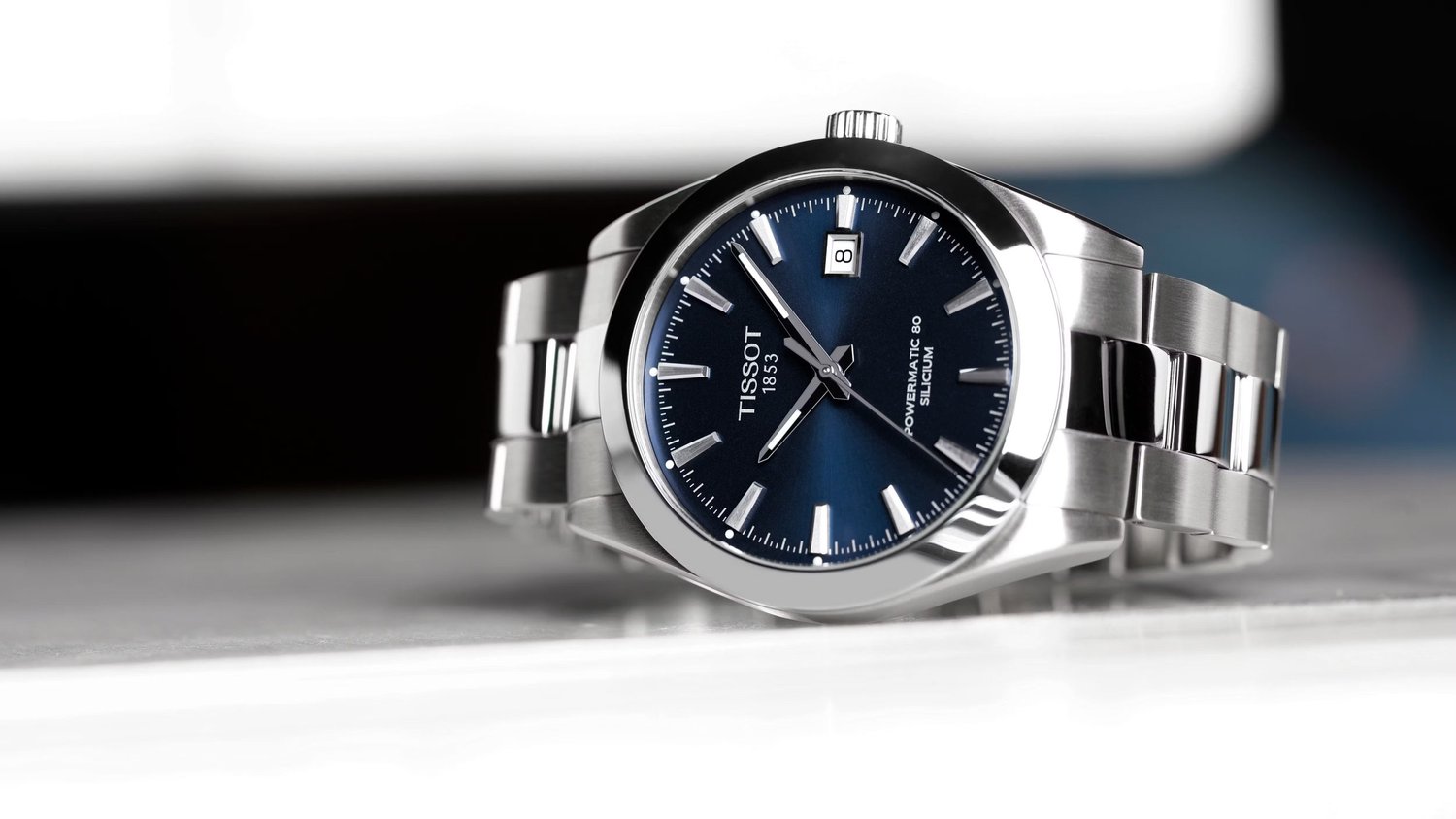
• 40mm, silicon balance spring, sapphire, 100m, dress-sport crossover — ~$600–$750 street.
✔ Best For: One-watch collections. Office-appropriate, weekend-tough, and anti-magnetic — the quiet overachiever of the catalog.
3. Tissot Seastar 1000 / 2000 (Best Dive Watch)
• 300m (2000) or 200m (1000) water resistance, unidirectional bezel, Powermatic 80 or quartz options — ~$375–$795.
✔ Best For: Buyers who want a Swiss automatic diver without the $1,500+ Longines or Oris ticket.
4. Tissot Le Locle Powermatic 80 (Best Dress Watch)
• 39.3mm, guilloché-style dial, Roman numerals, sapphire, display caseback — ~$450–$650 street.
✔ Best For: Weddings, suits and first 'proper' Swiss watches — the classic dress piece at a non-classic price.
Tissot vs the Competition
• vs Seiko: Seiko offers more design romance, better lume and stronger resale in the Prospex line; Tissot counters with Swiss Made cachet, sapphire at lower prices and the 80-hour reserve. A first 'nice watch' can honestly go either way — pick the design you'll actually wear.
• vs Hamilton, Certina and Mido: all Swatch Group siblings using related movements. Hamilton sells field-watch heritage, Certina sells toughness-per-dollar, Mido sells architecture-inspired design. Tissot usually matches their specs for slightly less money; the choice is styling, not quality.
• vs Citizen: Citizen's Eco-Drive solar eliminates maintenance entirely and costs less, but it's Japanese quartz against Swiss mechanical romance. If winding and sweeping seconds matter, Tissot; if never-thinking-about-it matters, Citizen — see our Citizen verdict for the full breakdown.
📌 Key Takeaway: Under $800, Tissot's combination of Swiss Made, sapphire and the Powermatic 80 is the strongest spec sheet in its class. Above $1,000, start cross-shopping Longines.
Do Tissot Watches Hold Their Value?
No — and no honest guide should pretend otherwise. Tissot is a high-volume brand with permanent availability, so most models lose roughly half their retail price the moment they leave the AD. The PRX holds up best; limited editions occasionally buck the trend. The correct mental model: a $550 PRX worn daily for a decade costs about fifteen cents a day and can be serviced forever. That's not depreciation to fear — it's the price of admission, paid once.
Final Verdict: Are Tissot Watches Good?
Yes — confidently, in its lane. Tissot delivers real Swiss watchmaking: 170 years of continuous operation, movements with class-leading specs, sapphire where rivals cut corners, and the safety net of the Swatch Group behind every sale. It's the brand engineers and first-time Swiss buyers choose with spreadsheets, and it rewards them.
✔ Buy a Tissot if you want maximum Swiss substance under $800 — start with the PRX for style, the Gentleman for one-watch duty, the Seastar for the water, the Le Locle for the suit.
🚫 Look elsewhere if you need status signaling, strong resale, or the high-Swiss finish of Omega and Grand Seiko territory — Tissot isn't playing that game and doesn't claim to.
A brand selling honest value has to be honest about what it is. Tissot is: the sensible door into Swiss watchmaking, and for most buyers, the only one they ever need to walk through.
Our Favorite Tissot Watches on Amazon
Tissot PRX Powermatic 80
The integrated-bracelet phenomenon with the 80-hour automatic and sapphire crystal. The single best-selling Swiss watch in its class for a reason — start here.
Tissot Gentleman Powermatic 80 Silicium
The do-everything Swiss automatic: silicon balance spring, 100m, and a dial that works with anything from denim to a suit. Our pick for a one-watch collection.
Tissot Seastar 1000
A proper Swiss dive watch with 300m-capable engineering, a ceramic-style bezel and the Powermatic 80 — the affordable answer to the Swiss diver question.
Tissot Le Locle Powermatic 80
The classic dress watch with a decorated automatic visible through the caseback. The default graduation, wedding and first-Swiss-watch gift.