Disclosure: The Watch Goat is reader-supported. When you buy through links on this page, we may earn an affiliate commission from Amazon at no extra cost to you. Prices and availability change — check the listing for the current price.
Every genuine Rolex leaves Geneva with a unique serial number, and learning how to check if a Rolex is real using the serial number is the fastest first filter you have. The number tells you roughly when the watch was made, lets you cross-check the seller's story, and — crucially — is one of the hardest details for counterfeiters to get right. It is not the only check you should run, and our full guide to spotting a fake Rolex covers the rest, but it is where every smart verification starts. Here is exactly where to find it, how to decode it, and the engraving red flags that expose a fake in seconds.
One honest caveat before the steps: a serial number alone cannot prove authenticity. High-end replicas now copy real serial formats and even laser-etch rehauts. Treat the serial as a strong first screen — a watch that fails it is almost certainly fake, while a watch that passes it still needs the physical checks covered later in this guide.
Where to Find the Rolex Serial Number
Pre-2005 Models: Engraved Between the Lugs
On Rolex watches made before roughly 2005, the serial number is engraved on the case between the lugs at the 6 o'clock position, hidden under the bracelet or strap. You will need to remove the bracelet to see it — a five-minute job with a spring bar tool, done carefully to avoid scratching the case. The reference (model) number sits between the lugs at 12 o'clock, so one inspection gives you both identifiers. The engraving should be deep, crisp and perfectly straight, in Rolex's clean sans-serif font.
2005 Onward: Laser-Etched on the Rehaut
Rolex began engraving the serial number on the rehaut — the inner metal ring between the dial and the crystal — at the 6 o'clock position starting around 2005, alongside the repeating ROLEXROLEX pattern with the coronet at 12. We have a dedicated breakdown of when Rolex started engraving the rehaut if you want the full timeline. The rehaut serial is visible without removing anything; a loupe makes it easy to read. On genuine watches the laser etching is razor sharp; on fakes it tends to look faint, sandy or slightly misaligned with the dial markers.
The Zero-Tools Option: Papers and Warranty Card
If the watch comes with its original warranty card, certificate or box, the serial number is printed on them — no bracelet removal needed. Compare it digit by digit against the number on the watch itself. Mismatched paperwork is a genuine red flag; missing paperwork is common and simply means the physical checks matter more.
How to Decode a Rolex Serial Number by Era
Rolex has used three serial systems, and knowing which one your watch should have is itself an authenticity check:
- 1926–1987: purely numeric serials, roughly four to six digits, climbing steadily through the decades. A published lookup chart can date these watches to within a year or two.
- 1987–2010: a letter prefix followed by six digits (the R, L, E, X, N, C, S, W, T, U, A, P, K, Y, F, D, Z, M, V and G series). The letter marks the approximate production period — F-series, for example, covers the mid-2000s.
- 2010–present: randomized eight-character serials mixing letters and numbers. These cannot be dated from public charts, so a seller claiming an exact year from a random serial is guessing — or bluffing.
Once you know the format, cross-reference the serial against a reputable online production chart to get an approximate year. Then sanity-check it against the model: a 1990s serial on a watch sold as a 2020 model, or a serial era that predates the reference's launch, means something is wrong.
How to Verify the Serial Number, Step by Step
- Step 1 — Photograph the serial, whether between the lugs or on the rehaut, in sharp angled light so every character is legible.
- Step 2 — Check the format against the era table above: right length, right character set, right location for the claimed production year.
- Step 3 — Run the number through a trusted serial database or production chart and confirm the result matches the watch's claimed age and model family.
- Step 4 — Match the serial against the warranty card, certificate and any service records. Every document should agree exactly.
- Step 5 — For any purchase where the money matters, pay for a professional authentication: an authorized dealer, a reputable watchmaker, or a marketplace authentication service. It is cheap insurance on a four- or five-figure purchase.
Serial Number Red Flags That Scream Fake
- Shallow, wobbly or dot-matrix engraving. Rolex engravings are deep, sharp and perfectly aligned; acid-etched or dotted serials are a classic replica tell.
- A serial that contradicts the model. If the serial dates the case to 1998 but the reference was introduced in 2010, at least one part of the story is false.
- Duplicate serials. Counterfeiters stamp the same number on thousands of watches; if searching the serial returns forum posts about other 'identical' watches, walk away.
- A serial engraved on the caseback. Standard Rolex models do not carry serial numbers on the outside of the caseback — a number there is near-certain proof of a fake.
- A rehaut serial with the wrong font, wrong spacing, or a coronet that doesn't sit at 12 o'clock. The rehaut is harder to fake convincingly than the lugs, which is exactly why Rolex moved the serial there.
Five Checks That Confirm What the Serial Tells You
A serial that passes inspection earns the watch a closer look, not a clean bill. Run these alongside it:
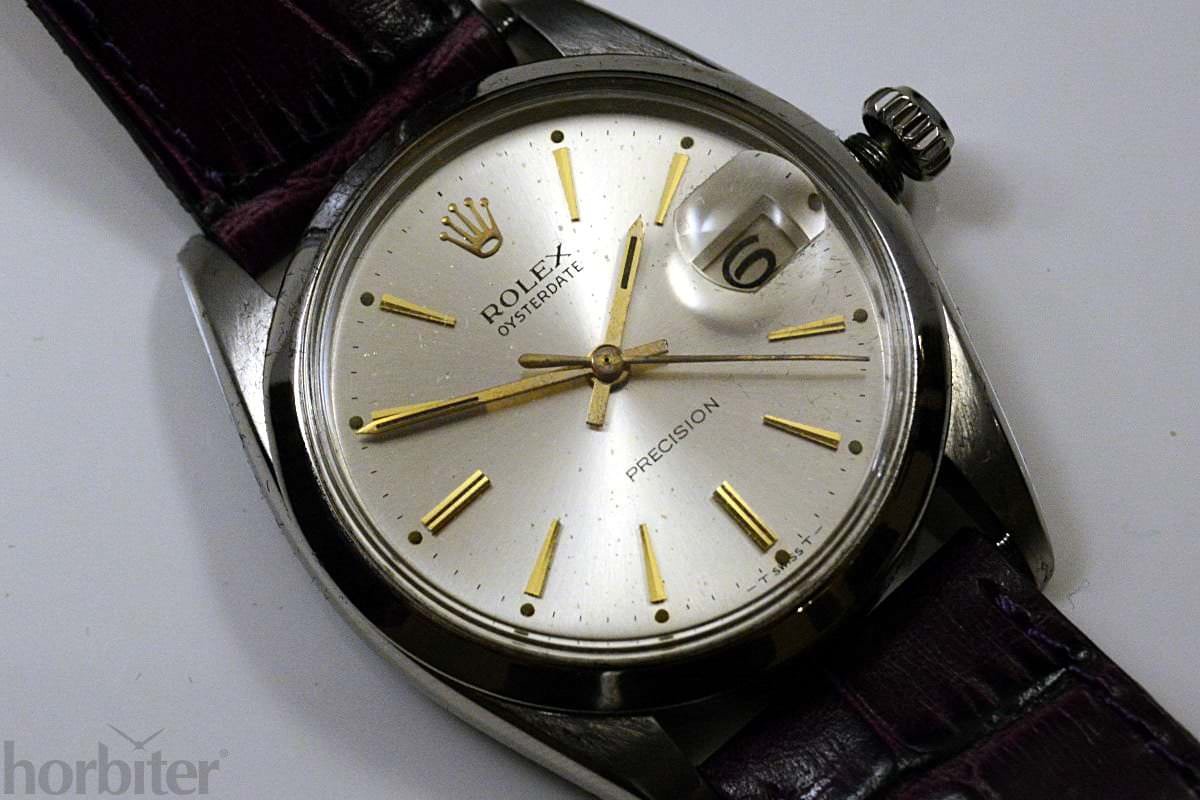
- The Cyclops: a genuine date magnifier enlarges 2.5x and centers the date perfectly; weak magnification or an off-center date is a classic giveaway.
- The seconds hand: Rolex mechanical movements sweep at 28,800 beats per hour — a visible once-per-second tick means quartz, and quartz almost always means fake (rare vintage Oysterquartz models excepted).
- Weight and materials: modern Rolex cases are solid 904L steel, gold or platinum. A watch that feels light, hollow or rattly is telling you something.
- Dial printing: under a loupe, genuine dial text and coronets are flawless. Fuzzy edges, bleeding ink or uneven lume plots fail the test.
- Finishing: the case edges, crown knurling and bracelet links on a real Rolex are finished to a standard replicas rarely match. Rough or sharp edges anywhere are a warning.
The Authentication Toolkit: 4 Affordable Tools Worth Owning
You do not need a workshop to check a serial number properly — just four inexpensive tools that pay for themselves the first time they catch a problem. Each pick below links to Amazon, where you can check the current price:
1. A 10x Jeweler's Loupe
The single most useful authentication tool ever made. A proper 10x triplet loupe reveals the difference between Rolex's crisp engraving and a faker's acid etch in one glance, and it doubles for reading rehaut serials without removing the bracelet. Expect to pay $15–$30 for a good one.
2. A Spring Bar Tool
To read a pre-2005 serial you must remove the bracelet, and the right tool does it without scratching the lugs. A $10–$20 kit with spare spring bars is the safe way in — a knife blade or paperclip is how cases get scarred and values drop.
3. Digital Calipers
Case dimensions are a quiet authenticity check: a reference's diameter and thickness are published specs, and replicas routinely get them wrong by a millimeter or more. A $20 stainless digital caliper confirms in seconds whether the case in your hand matches the reference it claims to be.
4. A 0.01g Precision Scale
Weight is one of the hardest things for counterfeiters to fake. Genuine Rolex models have well-documented weights, and a scale accurate to a hundredth of a gram costs around $15–$25. Weigh the full watch on its bracelet and compare against published figures for the reference — a meaningful gap demands answers.
Frequently Asked Questions
Can two genuine Rolex watches share a serial number?
No. Rolex serials are unique to each watch within their era. Two watches carrying the same serial means at least one is counterfeit — and finding duplicates online is one of the strongest fake indicators there is.
What if the serial number is worn away or polished off?
Heavy polishing can fade lug engravings on older pieces, which complicates verification without automatically making the watch fake. In that case, lean on the physical checks above, a movement inspection, and professional authentication — and expect a discount to compensate for the uncertainty.
Will Rolex verify a serial number for me?
Rolex and its authorized dealers can confirm whether a serial matches their records and corresponds to the model presented, though policies vary by location and they will not appraise watches by email. For a purchase decision, an independent watchmaker's written authentication is usually the practical route.
Is the serial number the same as the model number?
No. The serial identifies the individual watch; the reference (model) number — between the lugs at 12 o'clock or on the paperwork — identifies the model, bezel and material configuration. You need both for a complete verification, and both should agree with the watch in front of you.
The Bottom Line
Checking a Rolex serial number takes ten minutes and a $15 loupe, and it filters out the majority of fakes before you spend a cent. Find the number where the era says it should be, decode the format, cross-check the paperwork, and back it up with the physical checks above. If anything disagrees — the engraving, the era, the weight — believe the evidence, not the seller. And when you are ready to buy, our guide to what a fake Rolex is actually worth and our ranking of the safest places to buy a used Rolex are the next reads.